

5 Signs Your Property Management Accounting Team Cannot Scale With Your Portfolio



Here is a question most CFOs rarely say out loud:
Could accounting be the reason your portfolio has stopped growing?
Portfolio expansion is often discussed through cap rates, debt coverage, and market timing. What gets overlooked is the operational load behind each new acquisition. Every new property brings onboarding complexity, including a new chart of accounts, entity setup, reporting structure, and owner expectations. All of this lands on a property management accounting team that is already stretched across multiple priorities.
At a certain point, the pressure begins to show.
A team that once closed books smoothly for 800 units starts struggling at 1,400. Not because capability has changed, but because the system was never designed for that level of scale.
This blog is for CFOs and CEOs who sense that accounting may be the hidden bottleneck but lack clear visibility into the impact. Below are five signs to watch for, along with what each one may be costing your business.
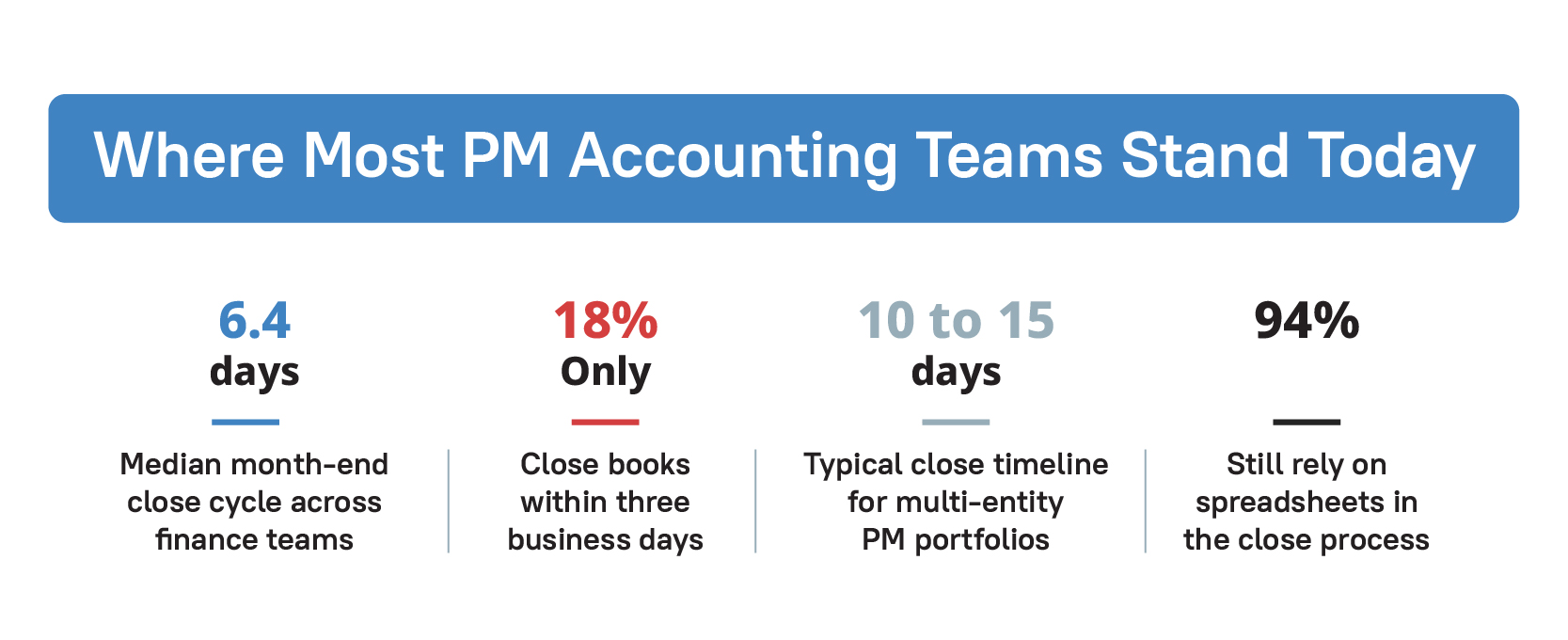
Sign 1: Month-End Close Takes Longer Than 10 Days
Your close takes 12, 15, or even 18 days every single month.
For many scalable property management portfolios, a 5 to 7 business day close is a common target, depending on portfolio complexity. When the process consistently stretches beyond 10 days, the issue is rarely effort. It is usually a sign that capacity, workflows, and controls have not evolved with portfolio growth.
- Investor and owner distributions get delayed
- Leaders make decisions using outdated numbers
- CFOs spend more time managing close activities than strategy
- Audit preparation becomes reactive instead of routine
A long close often points to manual reconciliations, inconsistent exception handling, and the absence of a documented close calendar that everyone follows.
"When the CFO becomes the backup process for closing the books, the business has already outgrown its accounting structure. Leadership should guide the function, not rescue it."
Sign 2: One Resignation Breaks the Entire Process
Ask yourself this question: if your lead real estate accountant resigned today, how long would it take to return to normal operations?
In many growing property management firms, critical knowledge lives with individuals instead of systems. The result is a process that works only because certain people know how to keep it running.
- Key reporting steps exist only in employee memory
- Special owner requests depend on one person
- Transition periods increase reporting delays
- New hires take months to become fully productive
The real risk is undocumented processes that leave the business exposed whenever someone leaves.
"Scalable accounting processes are designed to survive personnel changes. If knowledge disappears with an employee, the process was never truly built to scale."
Sign 3: Your Team Uses Spreadsheets to Plug System Gaps
Property management systems should support the process. They should not rely on spreadsheets to complete it.
Yardi, MRI, and AppFolio are powerful platforms. But when teams lack the time, training, or expertise to use them fully, excel becomes the unofficial accounting system.
- Manual entries increase the chance of errors
- Multiple versions create confusion and inconsistency
- Rework consumes valuable accounting hours
- Audit trails become difficult to maintain
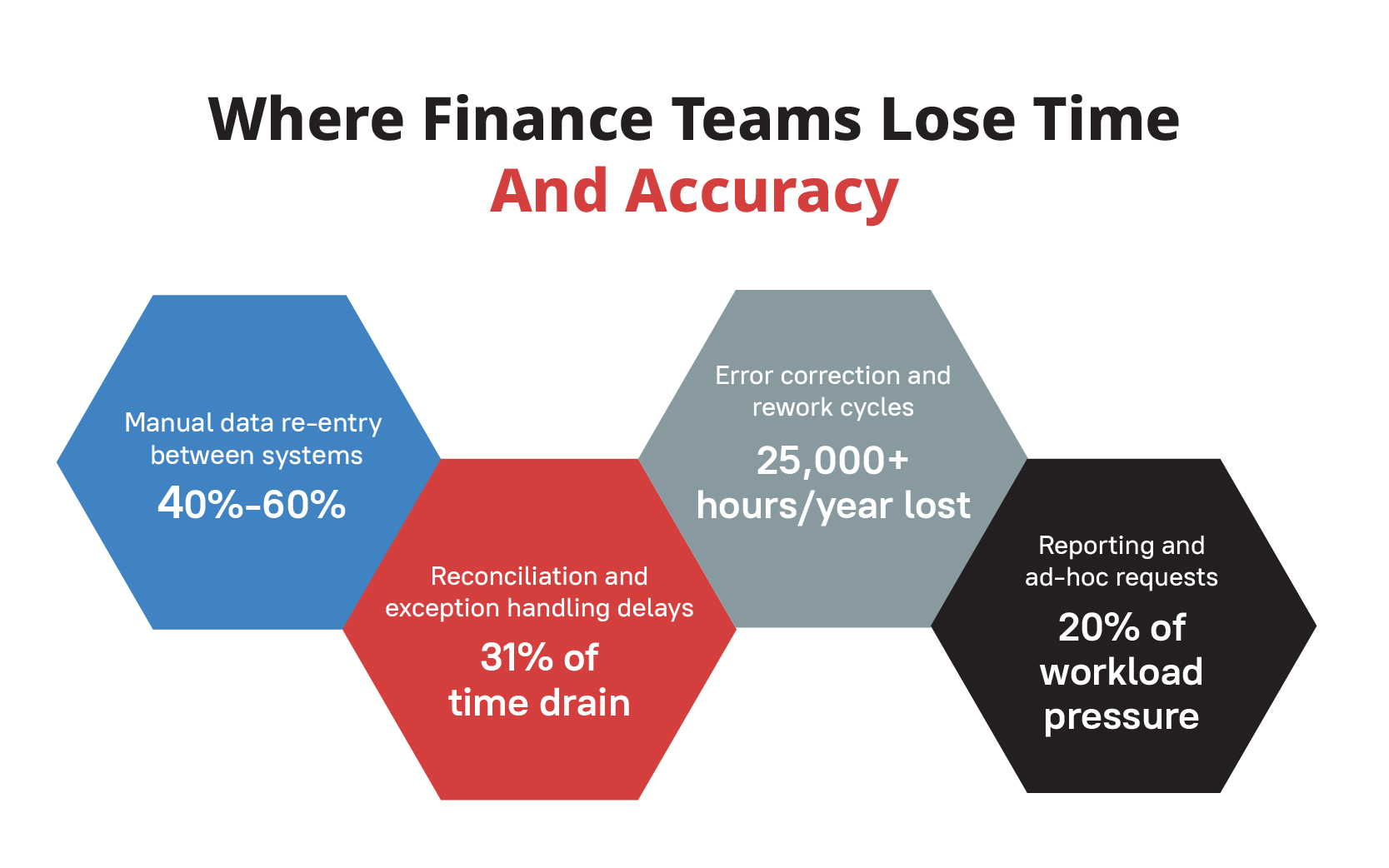
Note - Breakdown based on common finance process bottlenecks observed across property management firms.
At smaller portfolios, spreadsheet workarounds feel manageable. As portfolios expand across entities and properties, those same shortcuts become operational risks.
"Spreadsheets are useful tools. They become dangerous when they turn into the system of record."
Sign 4: The Cost Per Closed Unit Keeps Rising
Growth should improve efficiency. If accounting costs rise at the same pace as unit growth, something is limiting scalability.
Many teams reach a point where adding units means adding overtime, increasing headcount, or delaying lower-priority work. The process technically survives, but efficiency steadily declines.
- Overtime becomes part of the normal close process
- Hiring needs increase faster than portfolio growth
- Quality checks receive less attention
- Backlogs carry forward into future periods
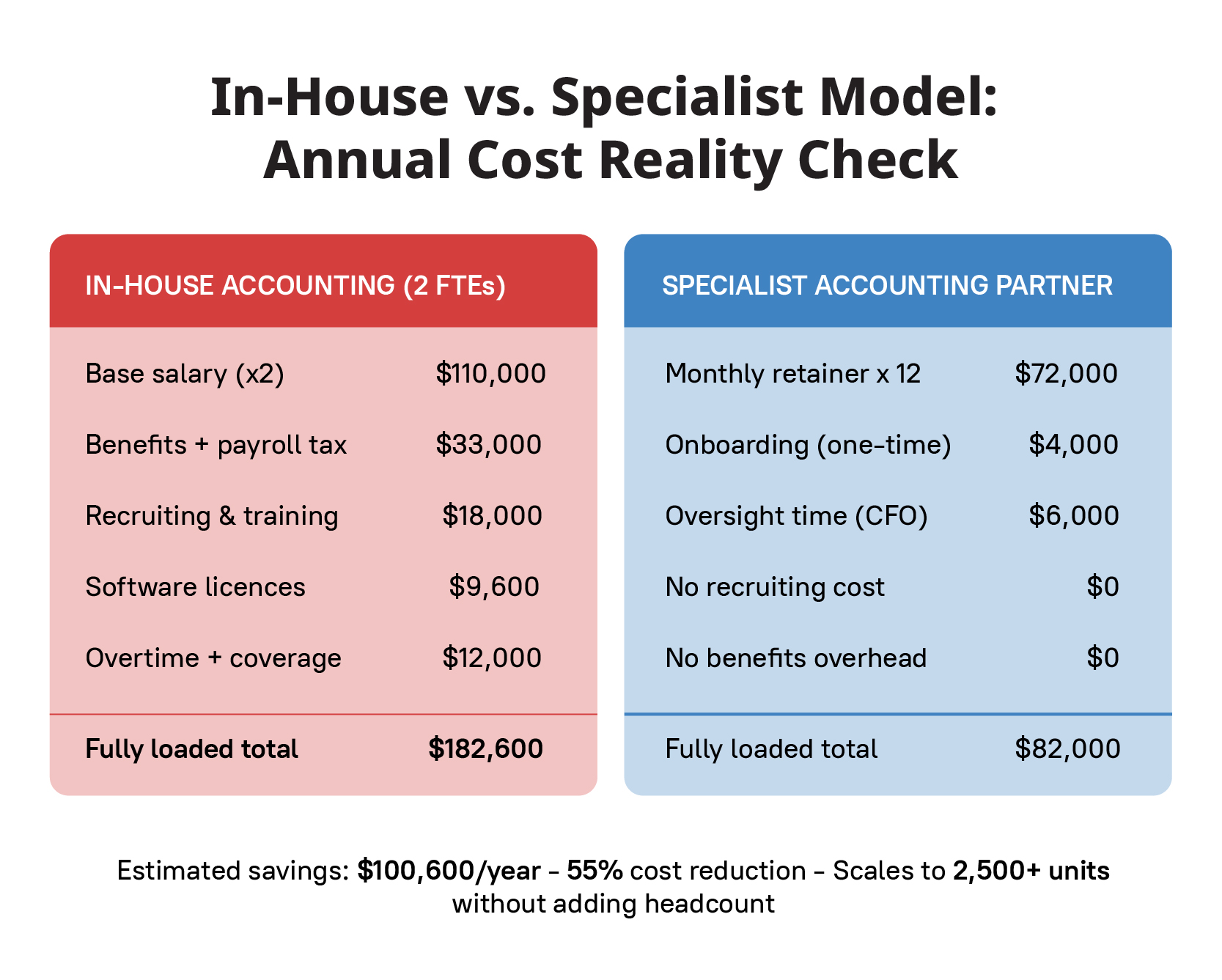
Note: Comparison for a mid-sized property management portfolio. Actual costs vary based on the market, complexity, and staffing structure.
This is where many property management portfolios quietly stall. Growth adds units, entities, and reporting requirements, but the accounting model remains unchanged. Teams compensate through overtime and reactive hiring until the economics of scale begin working against them.
The warning sign is not simply higher accounting spend. It is rising costs without a corresponding increase in capacity.
"The goal is not to build the largest accounting department. The goal is to build one that scales faster than the portfolio it supports."
Sign 5: Reporting Is Always Behind the Decision
If decisions rely on numbers that are weeks old, real estate accounting is slowing down the business. Many firms accept delayed reporting because it has always existed. Over time, it becomes normal. But it should not.
Fast decisions require current information. Whether it involves owner distributions, capital expenditure approvals, refinancing discussions, or acquisition evaluations, leadership needs confidence that the numbers reflect today’s reality.
- Variances remain unresolved for longer periods
- Owner reporting arrives later than expected
- Investment decisions rely on outdated information
- Investor confidence weakens through inconsistency
When leaders cannot trust the freshness of financial information, hesitation replaces confidence and opportunities become harder to capture.
"Timely reporting is not about convenience. It gives leadership the confidence to act while there is still time to influence the outcome.”
Free Resource
Take the Property Management Growth Bottleneck Scorecard
A quick way to identify whether your accounting function is keeping pace with portfolio growth.
- 8 simple questions
- Spot early signs of operational friction
- Benchmark your team's readiness for future growth
- Takes less than 2 minutes
Take the FREE Scorecard>> Lead Magnet 1 - Property Management Growth Bottleneck Scorecard - Real Estat - Copy
What These Signs Are Telling You
Each of these five signs points to the same underlying issue: your property management accounting function was built for the portfolio you managed two years ago, not the one you are operating today. And every quarter you delay addressing it; that gap quietly widens.
These issues rarely show up as one major breakdown. They build gradually through close delays, growing staff pressure, small errors that need rework, reports arriving slightly late, and a CFO spending more time managing accounting operations than leading finance.
By the time it becomes obvious, six to twelve months of growth may already have been slowed.
The Three Paths Forward
1. Hire and build internally
Works when the portfolio is stable, hiring timelines are manageable, and there is bandwidth to build a team. Expensive, slow, and fragile in a tight labor market.
2. Fix the process, keep the team
Works when the team is capable but the system is weak. Typically requires process redesign, system optimization, and a structured close calendar.
3. Partner with a specialist accounting team
Works when growth outpaces hiring, when variable cost is preferred, and when industry-specific expertise matters more than general capacity. This is where most $5M to $25M property management companies land.
The right path depends on your portfolio, growth trajectory, and current team structure.
What a Scalable Accounting Support Looks Like
The goal is not simply to add accounting capacity. It is to build a structure that can support growth without adding friction. At Analytix Solutions, that typically means combining standardized processes, platform expertise, controller-level review, and dedicated real estate accounting support that works as an extension of the existing team rather than disrupting current operations. The result is faster closes, more reliable reporting, and an accounting function that grows alongside the portfolio instead of slowing it down.
FAQs
We are spending too much time on CAM reconciliations. Is that normal?
Not usually. CAM reconciliation should follow a documented process with clear ownership and timelines. When it consistently delays reporting, it often signals broader workflow or system issues that need attention. should follow a documented process with clear ownership and timelines. When it consistently delays reporting, it often signals broader workflow or system issues that need attention.
My month-end closes takes more than 10 days. Should I be concerned?
A close longer than 10 business days is often an early sign that processes, staffing structure, or system utilization have not kept pace with portfolio growth. Many scalable property management accounting functions target a 5 to 7 business day close, depending on their portfolio complexity.
We use Yardi, AppFolio, or MRI. Would changing our accounting structure disrupt daily operations?
Not necessarily. Most process improvements and outsourced accounting transitions happen within the existing platform. The goal is to improve how work flows through the system, not interrupting day-to-day operations.
At what point do property management firms typically consider outsource accounting?
Many firms begin exploring outsourced support when close timelines slip, reporting delays become common, hiring becomes difficult, or portfolio growth starts outpacing internal capacity.
How long does it take for an outsourced accounting team to become productive?
The timeline varies by portfolio complexity, but most transitions begin with system access and process review. Teams are often supporting core accounting functions within the first month.
How much should property management accounting cost as a portfolio grow?
Costs vary by market, portfolio complexity, reporting requirements, and staffing structure. The more important metric is whether accounting capacity and reporting quality improve as the property management portfolio expands.
If my lead accountant left tomorrow, would that be considered a risk?
Yes. When critical processes depend on one person, the business carries operational risk. Scalable accounting functions rely on documented procedures, cross-training, and standardized workflows rather than individual knowledge alone.


.svg)
.svg)