

Real Estate Accounting Services: What a Controller Should Deliver Every Month



Ask a property management CEO what their controller delivers every month, and the answer usually stops at "financials."
Push a little further, and the list turns vague: some reports, a close, a compliance check. That gap is where budgets leak without anyone noticing. It sits between what a controller does all day and what a controller should hand over each month.
A real estate controller managing a large multifamily or commercial portfolio owes six specific deliverables every cycle. When those six items land on schedule, the books hold up under audit, and owners get their questions answered during a scheduled financial review.
Real estate accounting services make those six deliverables a fixed monthly output, regardless of who produces them, an in-house hire or an outsourced team.
This guide breaks down what the role should produce for your firm. It also covers why so many controllers end up buried in tasks a bookkeeper should own, and what changes once a firm brings in outsourced controller-level review services instead.
Controller or Bookkeeper? Why the Job Title Does Not Tell the Truth
Job titles say almost nothing about output.
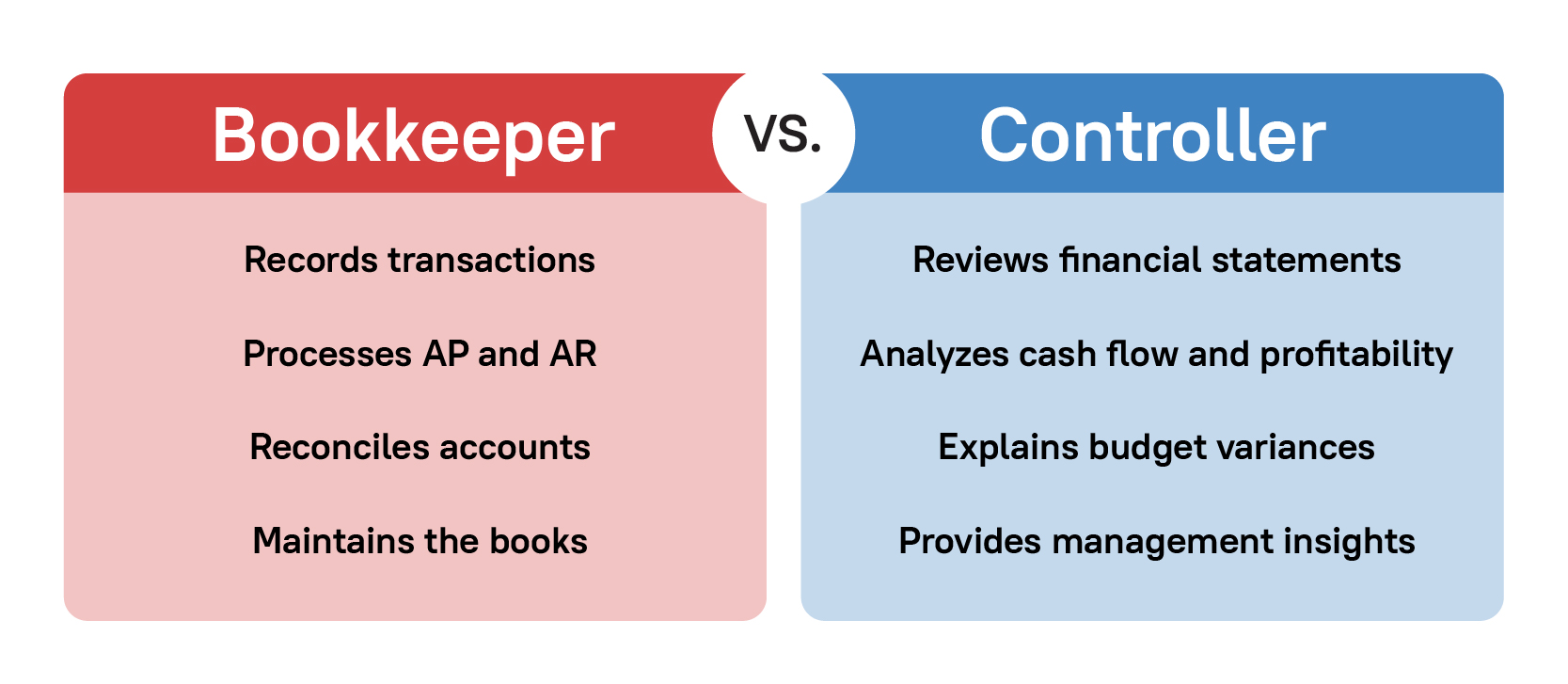
A controller and a senior bookkeeper can carry the same title at two different firms. By month five, they produce two completely different results. One reviews numbers before an owner ever sees them; the other enters transactions from the bank feed. That gap rarely shows up on an organizational chart.
It often shows up later, usually when audit season begins, when someone asks why last year’s owner statements do not tie to the general ledger.
Real estate accounting services separate these two functions on purpose.
Property management carries a layer of complexity general business accounting does not touch. Unit-level reporting, CAM reconciliation, security deposit trust accounting, and owner distributions all sit inside a controller's dedicated review scope. A CEO who cannot name what their controller reviews each month is not managing a finance function. They are hoping one exists.
The rest of this guide breaks down the six specific deliverables that separate controller-level review from bookkeeping with a different role attached.
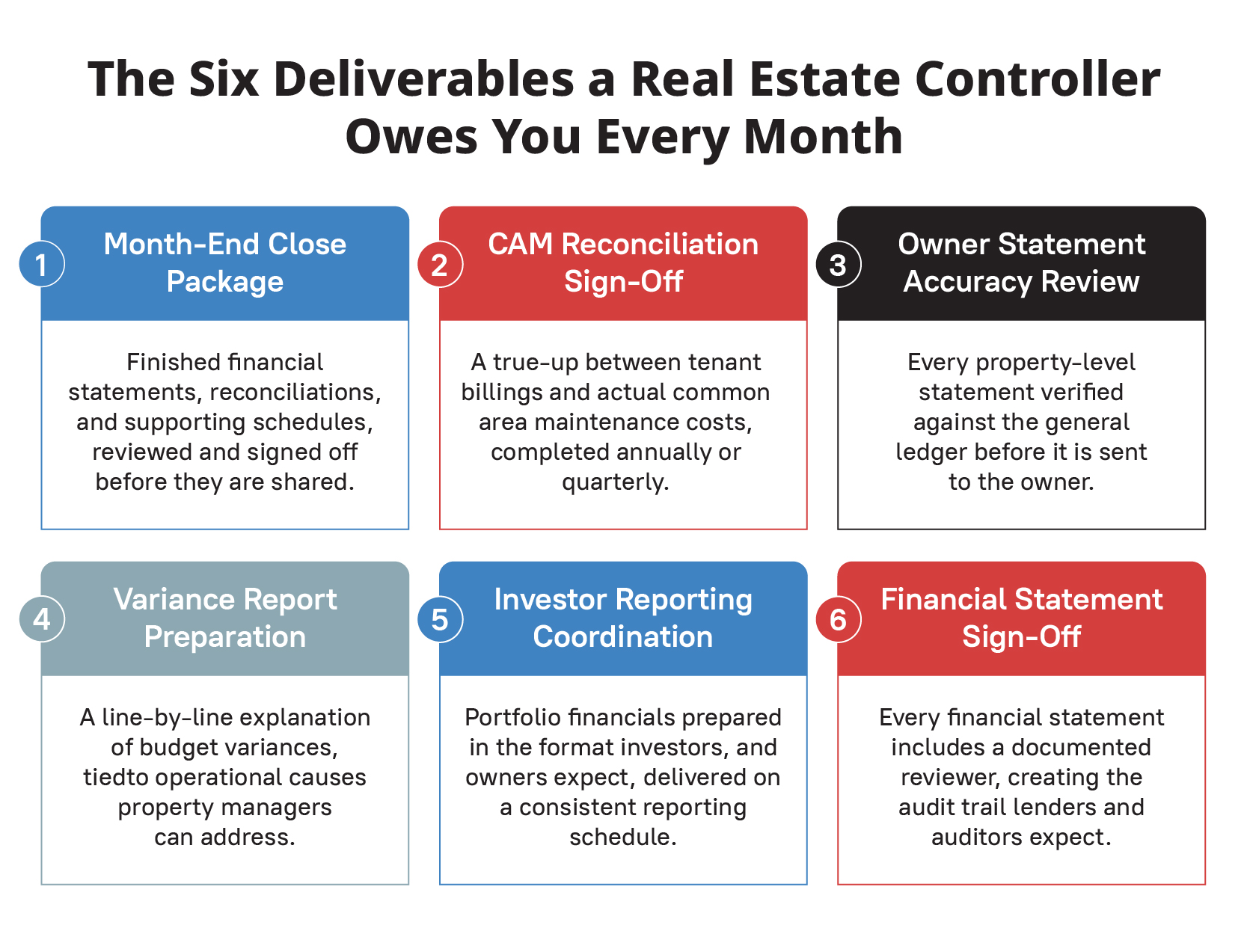
The Six Deliverables a Real Estate Controller Should Deliver Every Month
Strip away the job description. Controller-level oversight is one part of real estate accounting services. It means making sure six key deliverables are reviewed and ready every month, with the bookkeeping and day-to-day accounting work supporting them.
Each deliverable addresses a different area of financial performance and gives a CEO a clear view of what deserves attention.
1) Month-End Close Package
The month-end close package is the complete set of financial statements, reconciliations, and supporting schedules for a controller review before the books are considered final. It includes the balance sheet, income statement, bank reconciliations, and documentation explaining every adjustment entry.
A CEO should be able to sign off on the package within minutes, because every reconciliation ties; every adjustment carries a documented reason, and no number requires a follow-up call to explain. A complete close package reflects a thorough review, not a set of numbers that still needs another round of cleanup.
2) CAM Reconciliation Sign-Off
This deliverable applies specifically to commercial and mixed-use portfolios that bill tenants for shared property costs. Residential-only portfolios typically will not have a CAM component at all. CAM reconciliation compares the common area maintenance charges billed to tenants against the actual expenses incurred during the year or quarter.
A controller reviews every commercial property, calculates any overages or shortages, and documents the reason behind each variance. Small errors can carry forward from one cycle to the next, eventually leading to tenant disputes or significant year-end adjustments. A formal sign-off confirms the numbers have been reviewed, validated, and approved. For a closer look at how this process runs property by property, see the CAM reconciliation guide for commercial property management firms.
3) Owner Statement Accuracy Review
Unlike CAM reconciliation, this deliverable applies across the full portfolio, residential, commercial, or mixed-use, since every property owner receiving a statement needs it to match the general ledger regardless of asset type. Before an owner statement reaches a client's inbox, it should tie to the general ledger down to the last dollar. That means verifying income, expenses, distributions, and reserve balances for every property.
Even a small discrepancy can raise questions about the accuracy of the entire report. The controller review is the final quality check before financial information reaches property owners.
4) Variance Report Preparation
A variance report explains why actual results differ from expectations. Instead of simply showing a number, it identifies the operational reason behind it, whether that is higher maintenance costs, extended vacancies, utility increases, or delayed rent adjustments.
That operational explanation, not just the number itself, gives property managers something they can act on instead of another report to file away.
5) Investor Reporting Coordination
Investor reporting brings financial data together in the format investors and ownership groups expect. Different stakeholders often require different performance metrics, reporting views, and delivery schedules.
A controller ensures that every reporting package is accurate, consistent, and delivered on time. Reliable reporting builds confidence because property owners and investor groups know exactly what to expect each reporting cycle.
6) Financial Statement Sign-Off
Every financial statement should include documented controller review before it leaves the accounting department. That approval creates accountability and provides a clear audit trail showing who verified the numbers. During lender reviews or audits, this documentation demonstrates that financial statements followed a defined review process before distribution.
Why Controller Time Gets Pulled Into Transactional Work
Ask any finance leader in property management why this keeps happening. The answer traces back to a hiring market that stopped cooperating years ago. Accounting degree completions dropped 6.6% in the 2023 to 2024 academic year alone, continuing a multi-year decline, according to AICPA data reported by the Journal of Accountancy.
That pipeline has been shrinking for years. Firms cannot backfill the bookkeeping seat, so the work slides up to the person with the highest title in the department. That person is the controller.
Once a controller starts covering accounts payable data entry, rent roll updates, or bank reconciliations, something has to give. The six deliverables above get pushed to whatever hours remain before the financials are due. This is usually the point where firms start looking at dedicated controller oversight as a separate function from bookkeeping, rather than one person's overflow work.
Wondering how much controller time is being spent on transactional work instead of review? A property accounting review can help identify reporting gaps, bottlenecks, and opportunities to strengthen financial oversight across your portfolio.
What Misallocated Controller Time Actually Costs Your Firm
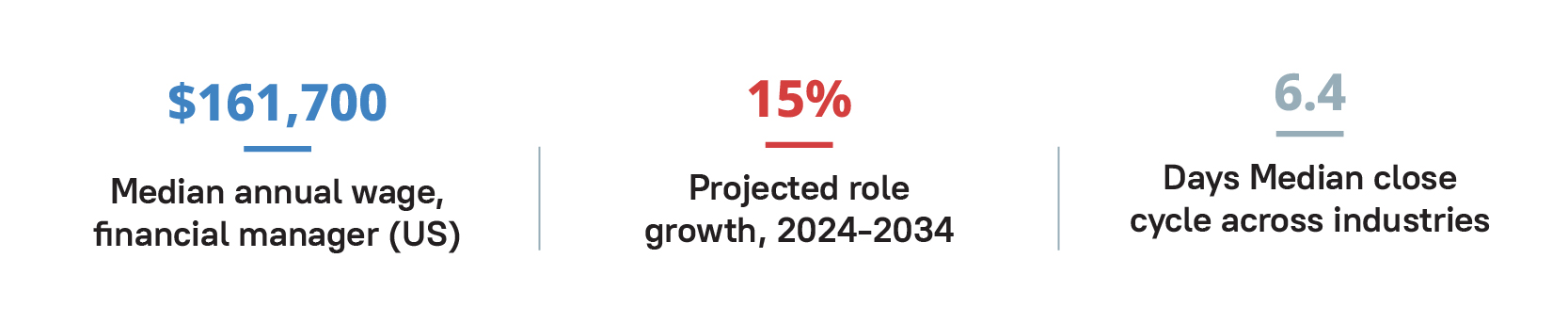
A financial manager in the United States earns a median annual wage of $161,700, according to the Bureau of Labor Statistics. Demand for the role is projected to grow 15% between 2024 and 2034. Firms pay for that level of expertise expecting higher-level work such as financial review, analysis, and sign-off. When a controller spends a third of the week handling bookkeeping tasks, the firm pays more for work that could be handled at a lower level while critical controller work gets less time.
The second cost shows up later, and it stings harder.
A rushed month-end close produces adjustments after the fact, and those after-the-fact adjustments are exactly what auditors tend to notice first. Cross-industry data from APQC, based on more than 2,300 organizations, places the median close cycle at 6.4 calendar days. However, property management firms typically operate against a practical benchmark of 7 to 10 business days, reflecting the additional reporting, reconciliation, and property-level review requirements involved.
When firms consistently push beyond that window, it is often because the person responsible for reviewing the close is still spending time producing it.
In-House Controller vs. Outsourced Controller-Level Review: A Cost and Coverage Comparison
The decision facing property management firm CEOs is not whether the six deliverables matter. It is who produces them, and at what cost.
An in-house real estate controller for a portfolio in the 500 to 2,500 unit range typically runs $110,000 to $150,000 in base pay, before benefits, recruiting costs, and onboarding time are added. That single-person dependency carries its own risk. One scenario that plays out repeatedly is covered briefly in the real cost of controller turnover breakdown. Outsourced controller-level review replaces that single point of failure with a team.
Outsourced real estate accounting services deliver the same six review functions at a lower blended cost, without a six-month hiring cycle for a vacant controller seat. That flexibility matters in a talent market that continues to tighten. According to the NASBA, the number of actively licensed Certified Public Accountants (CPA) in the United States fell from roughly 672,000 to 653,408 between 2024 and August 2025.
As experienced accounting professionals become harder to replace, many property management firms are looking for ways to maintain controller-level oversight without relying on a single difficult-to-fill position.
What Outsourced Controller-Level Review Looks Like in Practice
Outsourced controller-level review does not mean handing over the books and hoping for the best. It means a dedicated review layer sits on top of the transactional work. That layer checks the same six deliverables an in-house controller would own.
It works inside the property management software already in use, whether that is Yardi, MRI, or AppFolio. Controller-level services from a real estate focused partner typically cover four things: monthly close review, CAM reconciliation sign-off, budget-tied variance analysis, and a named reviewer on every owner statement.
The difference a CEO notices first is not the invoice; it is the calendar. Close runs on a fixed schedule now, not whenever the controller gets to it. Owner statements go out reviewed, not raw. Firms can also expand controller-level support as their portfolio grows, without adding another full-time hire. Real estate accounting services built this way give a CEO something rare: a documented review process that remains in place despite employee turnover.
The Turnover Risk Hiding Inside the In-House Model
A single controller carrying all six deliverables is also a single point of failure. Turnover in accounting roles has run high for years. When that person leaves, the six deliverables do not pause while a firm interviews replacements.
- Month-end close still needs a review
- CAM reconciliation deadlines do not move because a seat sits open
- Owner statements still go out on the calendar owners expect, reviewed or not
The real cost is the two or three months of financial statements that go out without a sign-off layer at all. That layer protects a firm during an audit, a lender review, or a hard conversation with an investor. The full breakdown of what controller turnover actually costs a growing portfolio covers the recruiting timeline, the coverage gap, and the audit exposure that opens up during a transition few CEOs plan for early enough.
Signs Your Portfolio Has Outgrown the Current Accounting Model
A handful of signals tend to show up before a firm admits it has a controller-capacity problem, often the same warning signs that appear before controller turnover creates a larger operational gap.
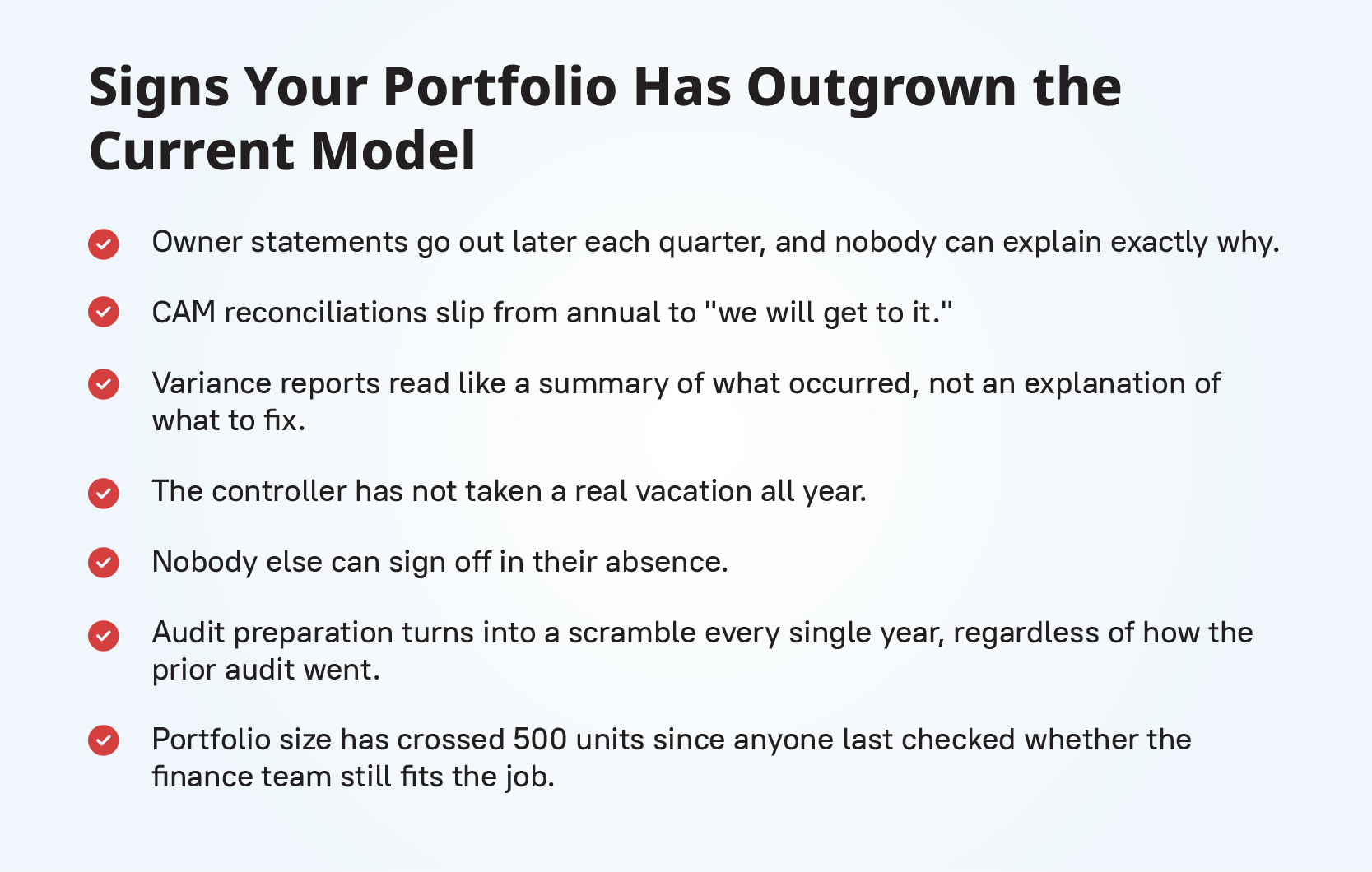
Any single item on its own is manageable. Three or four together usually means the model needs to change.
How to Evaluate a Real Estate Accounting Service Partner
Not every accounting firm that lists "real estate" on its website understands CAM reconciliations or trust accounting for security deposits. Many cannot even explain the difference between a rent roll and a general ledger.
Evaluating real estate accounting services starts with one question: ask a partner to walk through their process for the six deliverables above. Ask specifically how they approach CAM reconciliation for commercial properties, since that process can quickly show whether you are working with a real estate specialist or a generalist bookkeeping firm.
A vague answer here is the clearest disqualifier available.
Software fluency matters just as much. A partner unfamiliar with AppFolio, Yardi, or MRI adds a translation layer to every close instead of removing one. Ask for a same-day or next-day response time commitment in writing. Communication speed is one of the top factors property management CEOs consider when comparing providers. Pricing should also reflect the size and complexity of the portfolio, since a firm managing 1,000 units and one managing 2,000 units may have very different review needs.
One last question settles it: who covers review quality when the primary contact is out sick or on vacation? An in-house controller with no backup has one answer; nothing gets reviewed that week. A real estate accounting services partner built around a team should have a better one.
Rethink Your Property Management Accounting Strategy
A real estate controller contributes far more than financial oversight. The role brings structure to month-end close, confidence to owner reporting, discipline to reconciliations, and clarity to financial decisions. Whether that expertise comes from an in-house team or an outsourced model, the objective stays the same: delivering accurate, timely financial information that supports every property in the portfolio.
At Analytix Solutions, experienced real estate accounting professionals work alongside property management firms to deliver controller-level review, standardized processes, and reporting built around the way the industry operates. Firms can expand controller-level support as their portfolio grows, adding greater depth to financial review, reporting, and oversight without changing their core accounting systems. The focus is not simply on completing accounting tasks, but on strengthening the financial foundation that owners, investors, and leadership teams rely on every month.
If you are evaluating whether your current accounting function provides the controller-level support your portfolio requires, schedule a property accounting review. It is a practical opportunity to assess your current processes, identify opportunities for improvement, and explore what the right level of support could look like for your business.
Frequently Asked Questions
Does my property management company actually need a controller, or is a senior bookkeeper enough?
A senior bookkeeper records transactions and keeps the books current. A controller reviews financial accuracy, oversees month-end close, validates reports, and helps leadership make informed decisions. As portfolios become larger and more complex, controller-level oversight becomes increasingly valuable.
Can my firm outsource controller-level responsibilities instead of hiring another full-time employee?
Yes. Many property management firms use outsourced controller review services to handle financial reporting, reconciliations, and month-end oversight. This provides experienced support without expanding internal headcounts.
Will an outsourced controller work in AppFolio, Yardi, or MRI, or will my team need new software?
An experienced real estate accounting partner should work within your existing property management platform. That allows your team to continue using familiar systems while improving financial review and reporting processes.
How can I tell if my current controller is delivering enough value?
Start by reviewing the quality of your month-end close, owner statements, CAM reconciliations, variance reports, and investor reporting. Strong controller performance shows up through consistent accuracy, timely delivery, and reliable financial oversight.
Does CAM reconciliation apply to every property in my portfolio?
No. CAM reconciliation is specific to commercial and mixed-use properties where tenants share common-area costs. Residential-only portfolios generally will not need this deliverable. The CAM reconciliation guide for commercial portfolios walks through the process in more detail.
How long does it usually take to transition to outsourced controller-level support?
Every portfolio is different, but most transitions are completed over several weeks. A structured onboarding process allows financial reporting to continue without disrupting daily accounting operations.
What should I look for when choosing a real estate accounting services provider?
Look for experience with property management accounting, familiarity with platforms like AppFolio, Yardi, or MRI, documented review processes, controller-level expertise, and a proven approach to owner reporting, reconciliations, and month-end close.


.svg)
.svg)